Mind-Blowing Facts About Death Valley – You’ll Want To Visit ASAP
As a couple that has long been fascinated by America’s wildest landscapes, there’s something truly spellbinding about Death Valley! Whenever people hear the name, their minds jump to endless sand dunes and dangerous heat—but there’s so much more to uncover. We’ve prepared a selection of mind-blowing fun facts and useful tips to help anyone planning a visit or just curious about this otherworldly destination!
The Places Where We Go contains affiliate links and is a member of the Amazon Services LLC Associates Program. As an Amazon Associate, we earn from qualifying purchases at no extra cost to you when you purchase using one of these Amazon links. Read our disclaimer and privacy policy for more information.
Death Valley Quick Planning Guide
Don’t have much time? Here’s a quick mini guide for your epic Death Valley adventure!
Where to Stay:
- The Inn at Death Valley (Luxury Oasis) – Located at the Furnace Creek Ranch area, this is the premier spot for comfort.
- The Ranch at Death Valley (Classic, family-friendly base)
- Panamint Springs Resort (Great for stargazing)
Things to Do:
- Hike Dante’s View Trail or Mosaic Canyon
- Watch the sunrise or sunset at Zabriskie Point
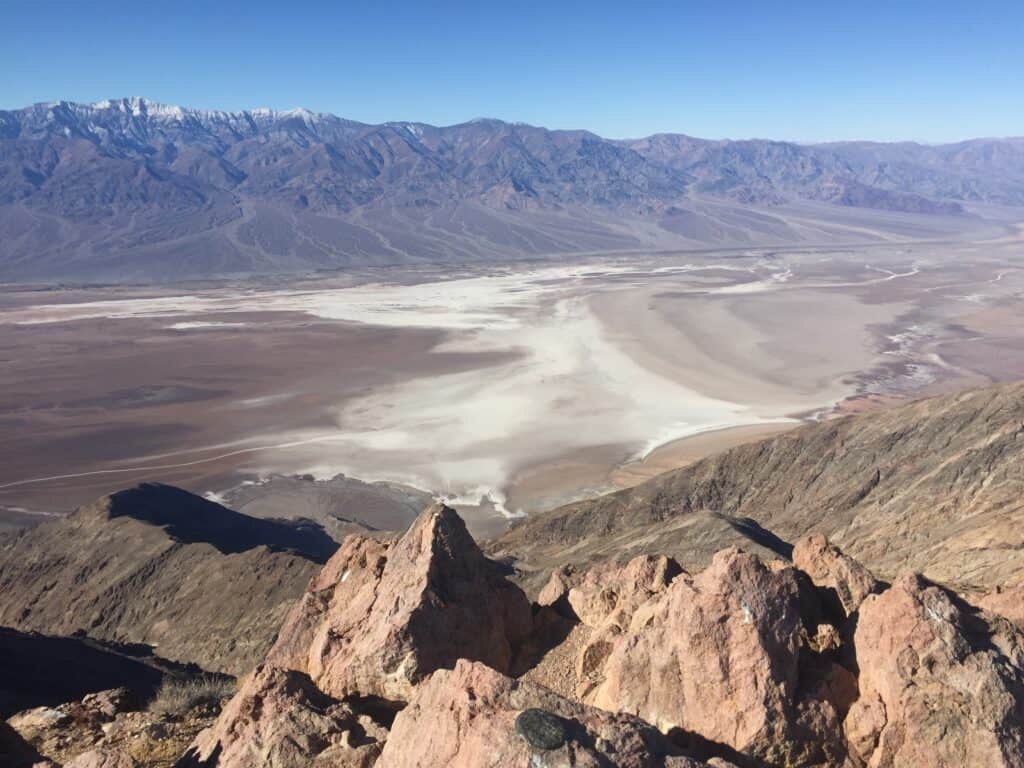
- Stand at Badwater Basin—the lowest point in North America
- Drive Artist’s Palette for stunning colors
- Photograph sand dunes at dawn or dusk
Places to Eat & Drink:
- The Last Kind Words Saloon (Rustic dining in the park)
- Panamint Springs Restaurant (Burgers with spectacular sunset views)
Get Free Weekly Travel Planning Guide
Destination Ideas – Practical Tips – Timely Travel News

What is Death Valley?
Before we dive into the specifics, let’s look at the big picture. Death Valley is a desert valley in Eastern California, located within the northern Mojave Desert, bordering the Great Basin Desert. It is one of the most extreme places on Earth, yet it supports a surprising amount of life and offers breathtaking scenery.
How Did Death Valley Get Its Name?
Let’s start with the basics—why is it called Death Valley? When a group of pioneers crossed this region in the winter of 1849–1850 during the California Gold Rush, they suffered from treacherous heat and lack of water. They were looking for a shortcut to the gold fields, hoping for a better life.
Many thought they wouldn’t make it, supposedly bidding the valley a somber farewell—“Goodbye, Death Valley.” Yet only one of the group actually perished, but the ominous name stuck, echoing the valley’s reputation for extremes. Before this, Native Americans, specifically the Timbisha Shoshone (also known as the Panamint Shoshone), had lived here for centuries, adapting perfectly to the environment.
Where Is Death Valley?
Death Valley National Park stretches across eastern California and partially into Nevada. It’s about 120 miles northwest of Las Vegas and 275 miles northeast of Los Angeles, making it surprisingly accessible for a weekend trip or long detour from either city.
The park is the largest park in the contiguous United States, covering over 3.3 million acres! That is more than 5,000 square miles of wilderness to explore.
How Hot Does Death Valley Get?
Death Valley is famous for its scorching temperatures and holds the record for the highest air temperature ever recorded on Earth: 134°F (56.7°C), measured at Furnace Creek in July 1913. Summer highs routinely soar above 120°F (49°C).
Due to the extreme heat, rangers strongly advise against hiking after 10:00 AM during the summer months. The valley floor radiates heat back up, making it feel like an oven. However, if you visit during winter, be prepared for cold nights when temperatures can drop near freezing.
Geography and Climate Extremes
One of the most interesting facts about this park is that it is a land of contradictions. It is the hottest place, the driest place, and the lowest place in North America.
Why is it so dry?
Death Valley lies in the rain shadow of four major mountain ranges, including the Sierra Nevada. As moist air moves in from the Pacific Ocean, it is forced up over these mountains. The moisture condenses and falls as rain or snow on the western slopes, leaving very little for Death Valley. The park receives less than 2 inches of rain on average per year!
Highs and Lows
The geography is dramatic. You have the lowest point at Badwater Basin, sitting 282 feet below sea level. Yet, just 15 miles away, Telescope Peak in the Panamint Range rises to 11,049 feet. This massive vertical drop is twice the depth of the Grand Canyon! Seeing snow on Telescope Peak while standing in the heat of the basin is a surreal experience.
Unique Death Valley Facts
- Lowest Point in North America: Badwater Basin sits at 282 feet (86 meters) below sea level. It’s so low that you can sometimes see Mount Whitney—the highest peak in the contiguous U.S.—from certain spots in the park on a clear day.
- Diverse Landscapes: From salt flats and sand dunes to mountain peaks and hidden oases, Death Valley is more varied than many realize. The park even has snow-capped mountains in winter!
- Starry Skies: Death Valley is designated as a Gold Tier International Dark Sky Park—on moonless nights, the stargazing is world-class.
- Mysterious Sailing Stones: At Racetrack Playa, a dry lake bed, rocks seem to “sail” across the ground, leaving trails behind them. Recent research revealed that thin layers of ice and wind combine to “move” the rocks, but it still feels magical.
The Sand Dunes of Death Valley
While less than 1% of the desert is covered in sand, the dunes are spectacular. The most famous are the Mesquite Flat Sand Dunes. These are easily accessible near Stovepipe Wells and look like something out of Star Wars (which was actually filmed here!).
For a more remote experience, check out the Eureka Dunes. These are the tallest dunes in California, rising nearly 700 feet from the Eureka Valley floor. These distinct dunes are also home to the Eureka Valley Evening Primrose and the Eureka Dune Grass, rare plants found nowhere else on Earth.
Water in the Desert?
Believe it or not, there is water here. Darwin Falls is a lush oasis fed by a spring that cascades all year round—a true miracle in the desert. You can also find Salt Creek, a seasonal stream that flows across the salty valley floor.
During the wettest month (usually February), you might see temporary lakes form. In rare years with significant rainfall, a “superbloom” occurs, carpeting the lower elevations in gold, purple, and white wildflowers.
Wildlife: Survivors of the Heat
You might expect the park to be barren, but it is teeming with life. Desert bighorn sheep are the icons of the park. These incredible climbers can go without water for days and are often spotted on rocky ridges at higher elevations.
Other animals include mountain lions, mule deer, coyotes, and bobcats. Smaller creatures like the kangaroo rat and various lizards scurry across the sand.
Perhaps the most famous resident is the Devils Hole Pupfish. These tiny, iridescent blue fish live in a detached unit of the park called Devils Hole. It is a water-filled cavern where the water temperature stays a constant 93°F. They are arguably the world’s rarest fish, having been isolated in this tiny water source for 10,000 to 20,000 years!
Human History and Ghost Towns
Long before it was a National Park Service site, this area saw mining booms and busts. You can explore ghost towns like Rhyolite (just outside the park boundary) to see the remnants of the past.
Within the park, the Harmony Borax Works offers a glimpse into the borax mining history. This is where the famous “20 Mule Team” wagons hauled borax out of the valley.
Then there is the bizarre and beautiful Scotty’s Castle in Grapevine Canyon. It was built in the 1920s as a vacation home for wealthy Chicagoans, but a con man named Walter Scott (Death Valley Scotty) claimed it was his, built with gold from his secret mine. It’s a fascinating piece of history currently recovering from flood damage.
Nearby Death Valley, you’ll find a stunning theater created by dancer Marta Beckett. Plan a side trip to Death Valley Junction to visit the Amargosa Opera House.
How Many People Live in Death Valley?
Despite the fierce environment, people do live here! Around 320 residents call Death Valley National Park home—mostly national park employees and members of the Timbisha Shoshone Tribe.
There is even a golf course at the Furnace Creek Visitor Center area—the lowest grass golf course in the world! It sits 214 feet below sea level.
Read our post – Do People Live in Death Valley for more information about living in this area.
How Many Days Should You Spend There?
To truly appreciate the highlights, 2–3 days is ideal for Death Valley. This allows time for sunrise and sunset views, several hikes, and enough distances between iconic sites. One full day is possible, but expect to feel rushed—especially if traveling from afar.
What’s the Best Time to Visit?
The most popular (and safest) time to visit is between November and March, when daytime temperatures are mild. Wildflower season in March can be particularly stunning after a wet winter.
Summer temperatures are brutal. Summer visits are possible but require extreme caution due to the high temperatures—always carry extra water, and plan only early morning or evening activities. Even the parking lot pavement can get hot enough to melt shoe soles!
From National Monument to National Park
President Herbert Hoover first proclaimed Death Valley National Monument in 1933. It wasn’t until 1994 that it was upgraded to National Park status and expanded significantly. This protection ensures that unique geological features like Ubehebe Crater—a massive volcanic crater—and ancient Bristlecone Pines on the high peaks remain preserved for future generations.
Is Death Valley Safe?
Despite the name, Death Valley is generally safe—when you’re prepared! The greatest hazards are heat, dehydration, flash floods, and getting stranded. Always check weather reports, fuel up often (gas stations are rare), and let someone know your plans if heading off the main roads.
For a long time, this was considered a “no-go” zone for tourists, but today, with paved roads and air-conditioned cars, it is much safer. Just remember, cell service is non-existent in most of the park.
Packing Tips for Death Valley
Essentials to bring for a comfortable trip:
- Water, and lots of it (at least a gallon per person per day)—there are very few natural water sources safe for drinking.
- Light, sun-protective clothing
- Sturdy footwear for rocky terrain
- Broad-brim hat and high-SPF sunscreen
- Sunglasses
- Headlamp or flashlight (for stargazing!)
- Extra snacks and emergency supplies
Don’t forget to top off the gas tank—distances between services are vast!
Final Thoughts
Death Valley is so much more than just a hot, dry stretch of land. From shimmering salt flats with a thick layer of salt to colorful canyons and the Black Mountains, its beauty and mystery leave a lasting impression on every visitor. It truly feels like the Twilight Zone compared to the rest of the Western Hemisphere.
Whether stopping for a day or embarking on an extended road trip, a journey through Death Valley is a true adventure into one of America’s wildest and most misunderstood national parks.
If you loved these interesting facts and trip planning tips, there’s a world of desert wonders waiting to be explored in Death Valley—just be sure to travel with care and a sense of awe!
Art & Julie
The Places Where We Go
