
Can You Take a Portable Phone Charger on a Plane? Top Tips
Picture this: You’re settling into your seat for a long-haul flight. You’ve got your favorite playlist queued up, a few movies downloaded, and your digital camera roll full of memories from your trip. But then, you see it—the dreaded low battery icon. Panic sets in. You reach for your bag, but then you pause. Can you actually take a portable phone charger on a plane? Or did you accidentally pack a prohibited item?
We’ve all been there. In our modern, hyper-connected world, running out of battery feels like losing a limb. Whether you are navigating a new city or just trying to stay entertained at 30,000 feet, keeping your devices charged is essential to air travel.
The short answer is yes, you can bring a phone charger on a plane! But—and this is a big “but”—there are strict rules about where you can pack it and how powerful it can be. If you pack it in the wrong bag, you might find yourself being called over the intercom by a gate agent or, worse, having your expensive gear confiscated.
Don’t worry, though. We’ve got you covered. In this guide, we’ll break down the Transportation Security Administration (TSA) guidelines, explain the difference between packing for carry-on luggage versus the cargo hold, and help you understand those confusing watt-hour limits. Your adventure awaits, so let’s make sure you have the extra juice to capture every moment!
The Places Where We Go contains affiliate links and is a member of the Amazon Services LLC Associates Program. As an Amazon Associate, we earn from qualifying purchases at no extra cost to you when you purchase using one of these Amazon links. Read our disclaimer and privacy policy for more information.
The Golden Rule: Carry-On Baggage Only
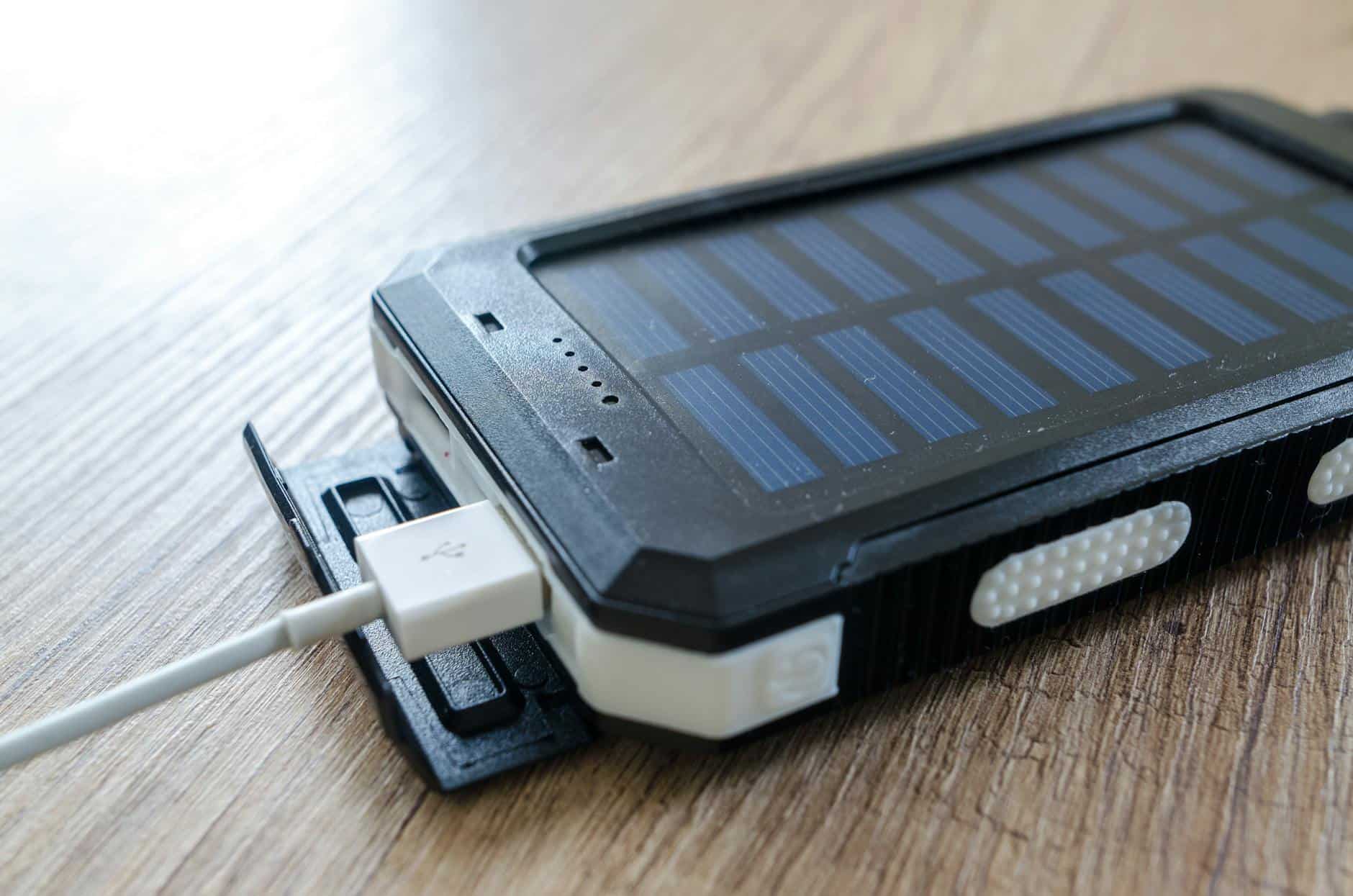
If you remember only one thing from this article, make it this: Portable power banks and spare lithium-ion batteries must always go in your carry-on luggage.
Under no circumstances should you pack a portable charger containing a lithium-ion battery in your checked luggage. This is a strict rule enforced by the Federal Aviation Administration (FAA), the International Air Transport Association (IATA), and virtually every airline worldwide, from British Airways and Virgin Atlantic to Alaska Airlines and U.S. carriers.
Get Free Weekly Travel News Updates

Why the Strict Rules?
It comes down to safety reasons. Most modern smartphones, laptops, and portable power banks use lithium-ion batteries (or, in some cases, lithium-metal batteries). While these are incredible at holding a charge, they pose a fire risk if damaged, punctured, or short-circuited.
If a battery malfunctions and ignites in the passenger cabin, the flight attendants and cabin crew are trained to handle it immediately. However, if that same battery catches fire deep in the luggage compartment (the cargo hold), the automatic fire suppression systems might not be able to effectively extinguish a chemical battery fire. That is a serious safety hazard that airlines work hard to avoid.
So, when you are packing your bags, always toss your Anker PowerCore, Magfast chargers, or any other portable battery into your hand luggage or backpack. It’s not just a good idea; it’s a requirement for passenger safety.
Understanding Capacity Limits: Watt-Hours and mAh
Okay, so you know it has to go in the cabin with you. But can you bring any size battery? Not quite.
Most airlines and security agencies have specific limits on the power capacity of batteries you can bring on board. The magic number you need to know is 100 watt-hours (Wh).
The 100Wh Limit
Generally, you are allowed to bring batteries with a capacity of up to 100 watt-hours for personal use without any special permission. This covers the vast majority of standard power banks used for mobile phones and tablets.
If you have a larger power bank (between 100Wh and 160Wh), you typically need airline approval. You essentially need to ask for special permission at the check-in counter. Anything over 160 Wh is usually considered dangerous goods and is completely prohibited.
How to Convert mAh to Watt-Hours
This is where it gets a little tricky, because most power banks list their capacity in milliamp-hours (mAh) rather than watt-hours.
To figure out if your charger is compliant, you can do a quick calculation:
(mAh capacity) / 1000 x (Voltage) = Watt-Hours
Most portable chargers operate at about 3.7 volts. So, if you have a 20,000mAh power bank:
20,000 / 1000 x 3.7 = 74Wh
Since 74 Wh is well below the 100 Wh limit, you are good to go! A 27,000 mAh power bank is roughly at the 100 Wh threshold (26,800 mAh is a common max size for travel-safe chargers). If you are carrying a beastly 30,000mAh power bank or higher, you might run into issues at the security checkpoint.
Always check the label on your device. The watt-hour rating of your powerbank battery should be clearly visible. If the label has worn off, a security officer might confiscate it because they can’t verify its safety.
Different Rules for Different Chargers
It is important to distinguish between the different types of charging equipment you might have.
1. Portable Power Banks (Battery Packs)
As mentioned, these are the external batteries you use to charge devices on the go. Because they contain lithium-ion cells, they are subject to the strict carry-on rules and capacity limits we just discussed. This applies to everything from a small, lipstick-sized charger to a beefy external battery for a laptop.
2. Standard Wall Chargers and Cables
Your regular charger—the brick you plug into a wall—and your USB cables do not contain batteries. Therefore, these electrical devices are allowed in both carry-on and checked bags. You can toss your wall plugs, wireless charging pads (that don’t have a built-in battery), and cords into your hold luggage without worry.
3. Smart Luggage
If you have a modern suitcase with a built-in charging port, be careful. These “smart bags” have integrated lithium batteries. If you plan to check the bag, you must be able to remove the battery and take it into the cabin with you. If the battery is non-removable, the bag cannot be flown.
Packing Tips to Breeze Through Airport Security
You want your journey through the security checkpoint to be as smooth as possible. Here are a few tips for packing your electronics:
- Protect the Terminals: The main reason batteries cause fires is short circuits. This happens when the battery terminals or USB ports come into contact with metal objects, such as keys or coins. To prevent this, keep your power bank in its original packaging or a dedicated pouch. Alternatively, place tape over the ports.
- Organize Your Cables: A mess of wires can look suspicious on an X-ray scanner, sometimes prompting a security agent to search your bag. Use a tech organizer to keep your chargers and cables tidy.
- Keep Them Accessible: At many airports, including major hubs like Gatwick Airport or busy terminals in the United States, you may be asked to remove large electronics and batteries from your bag. Don’t bury your power bank at the bottom of your backpack.
- Don’t Crush Them: When on the plane, be careful not to let your power bank slip between the seat cushions. The mechanism that reclines the seat can crush the lithium battery, causing a fire hazard or accidental activation.
Airline-Specific Regulations: Always Double Check
While the TSA website and FAA regulations provide a general baseline, every airline has the final say on what flies.
- British Airways & Virgin Atlantic: Generally follow standard IATA rules (100Wh limit).
- Scoot Flights & Budget Carriers: Some low-cost carriers have stricter weight limits for carry-on baggage (often 7kg total), so a heavy brick of a charger might eat into your allowance.
- Southwest & Alaska Airlines: Often require you to keep battery banks accessible and not buried in the overhead bin.
It is always a good idea to check the “Dangerous Goods” or “Baggage” section of your specific airline’s website before you travel.
Staying Powered Up Mid-Flight
So, you’ve made it on board with your trusty power bank. Can you use it?
Generally, yes! You are free to use your portable charger to keep your cell phones and tablets running during the flight. In fact, for a long flight on an older plane without in-seat power outlets, it’s an essential travel item.
However, you generally cannot charge the power bank itself using the plane’s power system, and you certainly shouldn’t leave it unattended while it’s charging a device.
Making Your Next Trip Stress-Free
Navigating airport security with electronics doesn’t have to be a headache. By following these simple rules—keeping lithium batteries in your carry-on, watching your watt-hours, and packing safely—you can breeze through to your gate.
Whether you are off to hike the epic trails in the USA National Parks, or exploring the streets of London, having a reliable power source ensures you never miss a photo op or a navigation turn.
So, pack that portable charger (in your hand luggage!), download your boarding passes, and get ready for your next great escape.
Thanks for reading our article about: “Can you take a portable phone charger on a plane?” Safe travels!.
Art & Julie
The Places Where We Go
More Travel Tips
33 Expert Travel Planning Tips From Adventurous Travel Bloggers
