

Sequoia National Park Scenic Drive – Best Stops on Generals Highway
Last updated October 2026
We’ve camped in Sequoia National Park more than 20 times, making it the national park we’ve visited more than any other. Even after all those trips, driving Generals Highway from the foothills toward Giant Forest remains one of our favorite ways to experience the park. This guide covers the roadside viewpoints we think are worth your time, the stops we’d prioritize on a first visit, and what you should know before tackling the highway’s steep switchbacks.
The main Sequoia National Park Scenic Drive follows the Generals Highway from the Ash Mountain Entrance near Three Rivers through the foothills, Giant Forest, and Lodgepole. If you continue north toward Grant Grove in Kings Canyon National Park, allow roughly 1 hour 45 minutes to 2 hours of driving without stops for sightseeing. For a first visit, plan at least half a day—and preferably most of a day—if you want to stop at viewpoints, see General Sherman, and explore Giant Forest.
The Places Where We Go contains affiliate links and is a member of the Amazon Services LLC Associates Program. As an Amazon Associate, we earn from qualifying purchases at no extra cost to you when you purchase using one of these Amazon links. Read our disclaimer and privacy policy for more information.
Sequoia National Park Scenic Drive at a Glance
| Main road | Generals Highway |
|---|---|
| Starting point | Ash Mountain Entrance near Three Rivers |
| Main scenic area | Giant Forest and Lodgepole |
| Extended route | Continue north toward Grant Grove in Kings Canyon National Park |
| Drive time | About 1 hour 45 minutes to 2 hours to Grant Grove without sightseeing stops |
| Time to allow | At least half a day; a full day is better |
| Best for | Giant sequoias, mountain views, overlooks and short hikes |
| Best season | Late spring through fall for the greatest road access |
| Road conditions | Steep, narrow and winding in places |
| Large vehicles | Check current NPS vehicle-length advisories before driving |
| Gas & EV charging | None inside Sequoia or Kings Canyon National Parks |
| Before you go | Check current NPS road, weather and seasonal closure information |
Our tip: After more than 20 camping trips to Sequoia, we recommend allowing a full day if this is your first time driving the Generals Highway.
Best Sequoia Scenic Drive Stops
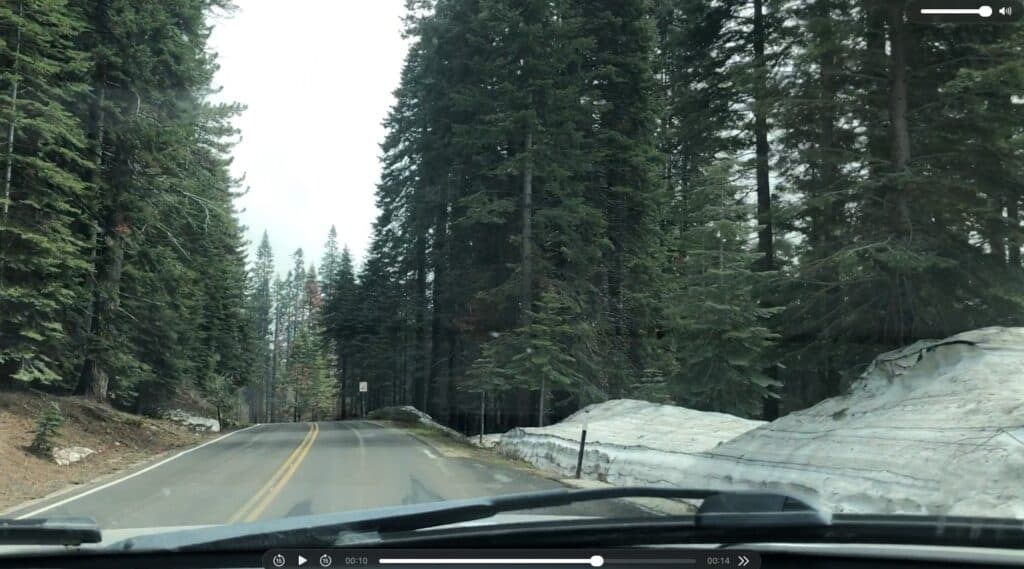
The best way to experience the grandeur and beauty of Sequoia National Park is by taking a leisurely drive down the scenic route. Whether you’re an avid hiker or just looking for a relaxing day trip, this drive offers something for everyone. With breathtaking views of granite peaks, ancient sequoia trees, and rushing rivers—not to mention the abundance of wildlife—this is one road trip you’ll never forget.


Daniel Mayer (mav), CC BY-SA 3.0 https://creativecommons.org/licenses/by-sa/3.0, via Wikimedia Commons
Tunnel Rock
Tunnel Rock is one of the first recognizable landmarks you’ll encounter after entering Sequoia National Park from the Ash Mountain Entrance. The massive granite boulder once formed a natural tunnel over the original park road and now makes an easy first photo stop along the Generals Highway.
Why stop here: Tunnel Rock is a quick introduction to Sequoia’s dramatic landscape and an easy place to stretch your legs shortly after entering the park. It’s also a fun historic roadside landmark and requires very little time.
Allow: About 5–10 minutes.
Parking: Limited roadside parking is available near Tunnel Rock. Because this is a short stop, spaces can fill up during busy periods, so don’t plan to spend much time here.
Our take: We think Tunnel Rock is worth a quick stop, particularly on your first visit to Sequoia National Park. It isn’t one of the park’s must-see destinations, but because it’s directly along the scenic drive and takes only a few minutes, there’s little reason to pass it by if parking is available.
Good to know: Don’t confuse Tunnel Rock with Tunnel Log. Tunnel Rock is near the park’s southern entrance and is a historic roadside landmark. Tunnel Log is the fallen giant sequoia that vehicles can drive through on the road toward Crescent Meadow, much farther into the park.
Hospital Rock
Hospital Rock is one of the most worthwhile stops in Sequoia’s foothills, especially if you want more than a quick roadside photo. The area was once home to a large Native American village, and visitors can see historic pictographs, bedrock mortars, and interpretive exhibits that explain the continuing cultural importance of this place.
Why stop here: Hospital Rock offers a combination you don’t get at most stops along the Generals Highway: Native American history, a pleasant picnic area, and access toward the Middle Fork of the Kaweah River. It’s also a convenient place to stop before continuing up the much steeper, more winding portion of the drive toward Giant Forest.
Allow: About 20–30 minutes for the pictographs and exhibits. Allow longer if you plan to picnic or explore toward the river.
Parking: There is a designated parking area at Hospital Rock, with additional facilities at the picnic area including restrooms, drinking water, picnic tables and food-storage boxes.
Our take: We think Hospital Rock is more worthwhile than many first-time visitors expect. If you’re simply rushing to the giant sequoias, it can be tempting to drive past, but we recommend stopping—particularly on your first visit. It adds important context to Sequoia National Park by showing that the park’s story extends far beyond its famous trees.
Good to know: The pictographs are sacred to local Native American communities, so admire them without touching or marking the rock. The viewing area is across the road from the picnic area, and traffic visibility can be limited, so cross carefully. Short, steep stairs lead to the pictograph viewing platform.
Amphitheater Point
Amphitheater Point is one of the best roadside viewpoints along the Generals Highway. Located between Hospital Rock and Giant Forest, the overlook offers a striking side view of Moro Rock, Castle Rocks, and the surrounding Sierra Nevada landscape.
Why stop here: You get a big scenic payoff without needing to hike. From the viewpoint, you can see how dramatically the landscape changes as the Generals Highway climbs from Sequoia’s foothills toward the higher elevations and giant sequoia groves.
Allow: About 5–10 minutes. This is primarily a scenic overlook and photo stop, so you don’t need to budget much time unless you simply want to linger and enjoy the view.
Parking: Parking is very limited and can fill quickly. If the pullout is full, continue along the highway rather than stopping in the roadway and consider returning later. Use extra caution when pulling back onto the Generals Highway because visibility is limited and traffic can be moving quickly.
Our take: We consider Amphitheater Point one of the best quick stops on the Generals Highway. Unlike some roadside pullouts where the view can feel similar to what you’ve already seen from the car, this one gives you a particularly good perspective of Moro Rock and the surrounding terrain. If parking is available, we’d stop.
Good to know: Look beyond Moro Rock for the rugged formation known as Castle Rocks across the canyon. The viewpoint is especially useful for appreciating just how much elevation you’ve gained since entering the park near Three Rivers. During cooler months, wildlife including deer and bears may move into the lower elevations, so keep an eye on the surrounding hillsides as well.

Daniel Mayer (mav), CC BY-SA 3.0 https://creativecommons.org/licenses/by-sa/3.0, via Wikimedia Commons
Eleven Range Overlook
Eleven Range Overlook is a roadside viewpoint along the Generals Highway between Hospital Rock and Giant Forest. From the overlook, the view stretches across the Kaweah Canyon toward the San Joaquin Valley—and on exceptionally clear days, you may even see California’s Coast Range in the distance.
Why stop here: This is one of the easiest places along the Generals Highway to appreciate just how far you’ve climbed above the foothills. The expansive view across the canyon and valley provides a completely different perspective from the giant sequoias you’ll encounter farther up the road.
Allow: About 5–10 minutes. It’s primarily a scenic viewpoint and photo stop, so you won’t need much time unless the visibility is particularly good and you want to linger.
Parking: A designated roadside pullout provides parking at the overlook. As with other viewpoints along this winding section of the Generals Highway, use caution when entering and leaving the roadway.
Our take: Eleven Range Overlook is worth stopping at when the skies are clear. On a good visibility day, the long-distance view makes this one of the more impressive pullouts along the climb toward Giant Forest. If the valley is covered in haze or smoke, however, we’d keep driving—you won’t be missing an essential Sequoia experience.
Good to know: The view here can change dramatically from one visit to another. Smoke, haze and air pollution in the San Joaquin Valley can obscure the distant mountain ranges, while a particularly clear day can reveal views far beyond the immediate Kaweah Canyon. Consider this a weather-dependent stop rather than one you absolutely need to build into your itinerary.

Gerd Eichmann, CC BY-SA 4.0 https://creativecommons.org/licenses/by-sa/4.0, via Wikimedia Commons
Four Guardsmen
The Four Guardsmen provide one of the most memorable moments on the Sequoia National Park scenic drive. As the Generals Highway reaches Giant Forest, four massive giant sequoias stand alongside the roadway like sentinels, creating a dramatic natural gateway into the grove.
Why stop here: The Four Guardsmen is less a traditional sightseeing stop and more an experience along the drive itself. After climbing through the foothills and winding mountain terrain, suddenly finding your vehicle surrounded by enormous sequoias signals you’ve reached one of the park’s most extraordinary parts.
Allow: About 5 minutes. You can appreciate the Four Guardsmen while driving through, although you may want a few extra minutes if you find a safe, legal place nearby to pull over for a photograph.
Parking: This isn’t a developed viewpoint with a large parking lot. Parking and pull-off space in the immediate area is limited, so don’t stop in the roadway or block traffic. If there’s no safe place to pull over, enjoy the view from the car and continue into Giant Forest.
Our take: Even after all our visits to Sequoia, driving through the Four Guardsmen still feels like an arrival. Bigger individual trees exist elsewhere in the park, but few moments capture the experience of driving through Sequoia National Park quite as well. We wouldn’t build extra time into an itinerary specifically for this stop—but we would definitely slow down and enjoy it.
Good to know: If you’re entering Sequoia from the Ash Mountain Entrance, the Four Guardsmen mark your transition into the Giant Forest area after the long, winding climb up the Generals Highway. This portion of the highway is narrow and curvy; the National Park Service advises against vehicles longer than 22 feet on the stretch between Potwisha Campground and Giant Forest Museum. If you’re traveling in a longer RV or towing a trailer, consider entering the parks from Highway 180 instead.
Giant Forest Museum and Beetle Rock
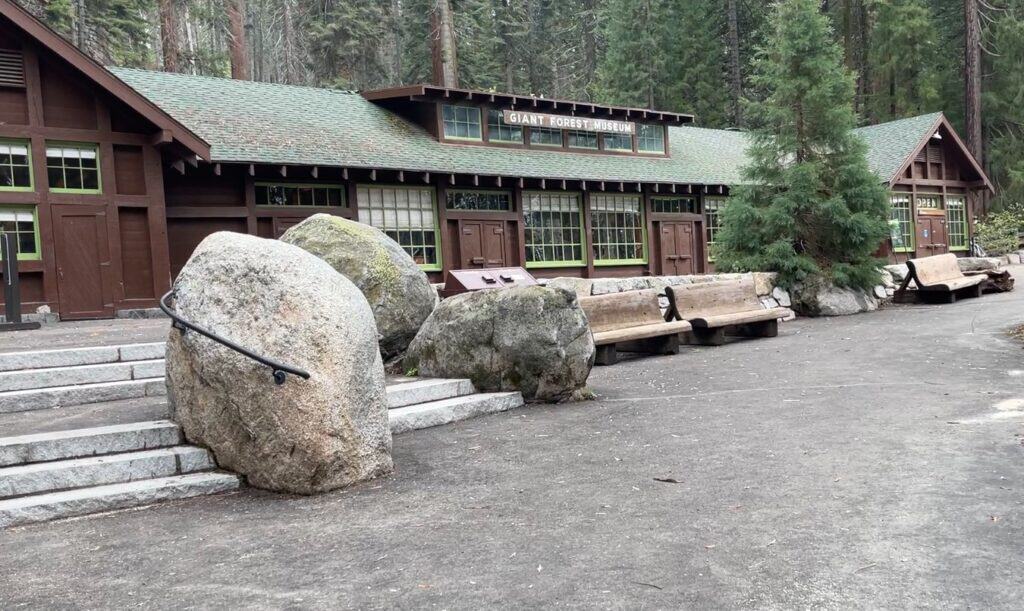
The Giant Forest Museum makes an excellent introduction to Sequoia National Park’s famous giant sequoias. Located along Generals Highway, the museum explains the natural and human history of Giant Forest and serves as a convenient starting point for several nearby trails and attractions. Just a short walk away, Beetle Rock offers an easy scenic overlook with expansive views west toward the San Joaquin Valley.
Why stop here: This is a good place to get oriented before exploring Giant Forest. The museum helps put the enormous trees you’ll see throughout the area into context, while Beetle Rock provides a completely different experience—a broad granite overlook with views stretching beyond the forest. The nearby Big Trees Trail is another option if you have extra time.
Allow: About 30–45 minutes for the museum and Beetle Rock. Allow an hour or more if you also want to walk part or all of the nearby Big Trees Trail.
Parking: Parking is available near the Giant Forest Museum, although spaces can become harder to find during busy summer periods. The museum is also an important stop on Sequoia’s seasonal shuttle system, making it a useful place to leave the car when shuttles are operating.
Our take: We especially recommend this stop for first-time visitors. After many trips to Sequoia, we don’t necessarily spend a long time inside the museum on every visit, but the surrounding Giant Forest area remains one of our favorite parts of the park. Beetle Rock is an easy bonus: it takes little effort and offers a scenic view that contrasts nicely with the enclosed feeling of the giant sequoia forest.
Good to know: Beetle Rock is only a short walk from the museum and is especially attractive around sunset. There are no stairs or formal trail onto the granite rock itself, so watch your footing, particularly if the surface is wet, icy, or snowy. Restrooms and a water-bottle filling station are available near the museum. During the summer shuttle season, Giant Forest Museum also serves as a transportation hub for destinations including Moro Rock and Crescent Meadow.

General Sherman Tree
The General Sherman Tree is the signature stop in Sequoia National Park, and we recommend it to every first-time visitor. Located in Giant Forest, General Sherman is the world’s largest tree by volume, standing about 275 feet tall with an estimated trunk volume of more than 52,000 cubic feet.
Why stop here: Even in a park filled with enormous sequoias, General Sherman is something special. The walk through Giant Forest gives you time to appreciate the scale of the surrounding trees before arriving at the famous giant itself. This is also a good jumping-off point for exploring more of Giant Forest, including the Congress Trail if you have additional time.
Allow: About 45–60 minutes for the walk to General Sherman, time at the tree, and the return to the parking area. Allow 1½–2 hours or more if you plan to continue onto the Congress Trail or spend extra time exploring Giant Forest.
Parking: The main General Sherman parking area is off Wolverton Road. From there, the paved trail descends about 0.5 miles to the tree. The parking lot frequently fills by late morning during busy periods, so arriving early or using the park shuttle can make the visit much easier. During shuttle season, free buses connect General Sherman with Giant Forest Museum, Lodgepole, and Wolverton.
Our take: General Sherman is one of those iconic park attractions that still feels worth visiting even after you’ve seen it many times. Yes, it can be crowded, but we’d consider it essential on a first trip to Sequoia. If you’ve visited before and want a quieter giant sequoia experience, we’d combine a brief stop here with one of the surrounding Giant Forest trails rather than limiting your visit to the famous tree alone.
Good to know: The walk from the main parking lot to General Sherman is downhill, which means the return trip is uphill and can feel more strenuous than visitors expect at this elevation. An accessible parking area closer to the tree is reserved for vehicles displaying accessibility placards, and the accessible trail is much shorter. During shuttle season, visitors can also use the shuttle system to reduce walking and avoid crowded parking. Stay on the designated paths and behind barriers around the tree—the shallow root system of giant sequoias can be damaged by foot traffic.
Lodgepole Campground & Village
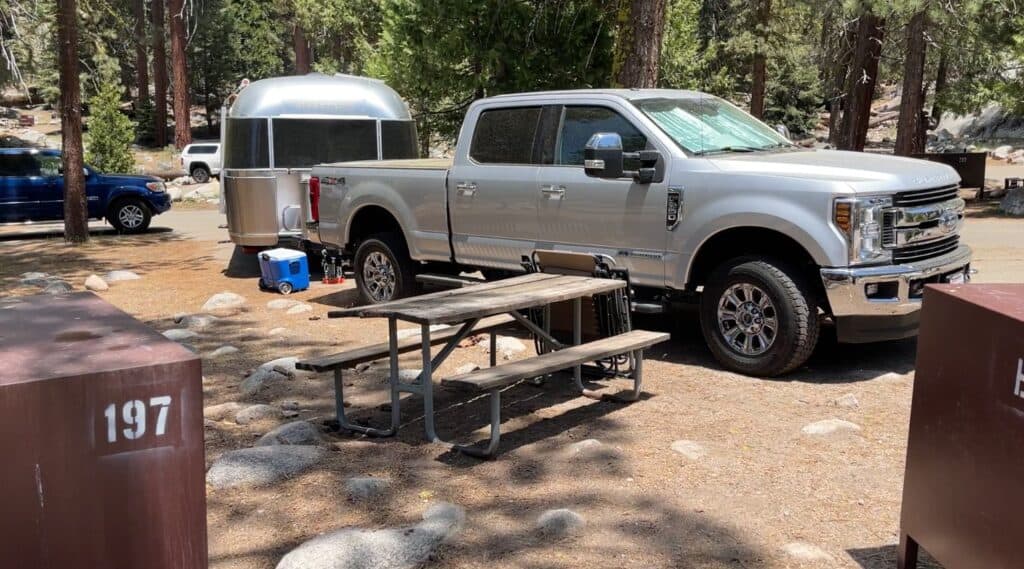
Lodgepole is one of the most convenient places to base yourself inside Sequoia National Park. Set along the Marble Fork of the Kaweah River at about 6,700 feet, the campground is only about a 10-minute drive from Giant Forest and within walking distance of Lodgepole Village. The campground has more than 200 sites, but no electric hookups.
Why we stop here: Even if you’re not camping, Lodgepole makes a useful break along the scenic drive. Seasonal services in the village include a market, casual food, showers, laundry, and the Lodgepole Visitor Center. It’s also close to several trails and serves as a convenient connection point for Sequoia’s free seasonal shuttle system.
You’ll find a hiking trail to Tokopah Falls in the middle of the campground. This is perhaps the most popular hiking trail in this part of the park and culminates at granite cliffs where you can view Tokopah Falls.
Allow: About 15–30 minutes if you’re simply stopping for supplies, food, the visitor center, or a break from driving. If you’re hiking from the Lodgepole area—or staying at the campground—this can obviously become a much longer stop.
Parking: Parking is available in the Lodgepole area, and during busy periods the National Park Service may recommend Lodgepole as one of the larger places to park and use the free shuttle to reach Giant Forest and the General Sherman Tree. If you’re camping, parking depends on your campsite.
Our take: Lodgepole’s greatest advantage is its location. If we’re spending several days in Sequoia, we like this kind of location because you’re already high in the park and close to Giant Forest, rather than repeating the long climb from Three Rivers each day. For scenic-drive visitors, we wouldn’t call Lodgepole itself a must-see attraction, but it’s one of the most useful stops on the route.
Good to know: Lodgepole Campground is typically open from late spring into fall and is reservation-only; you can generally make reservations up to four months in advance. It is one of the park’s most popular campgrounds, so availability can be very limited on weekends and holidays. No hookups are available, but seasonal amenities include potable water, flush toilets, a dump station, and food-storage lockers. Don’t expect cell service or internet connectivity.
Additionally, bear activity is also an important consideration here. The NPS currently designates Lodgepole as a high bear activity area. We have seen bears many times during our camping experiences at Lodgepole over the decades. As such, secure food, toiletries, and other scented items in the provided food-storage boxes rather than leaving them in vehicles.
Check out this post to find a great campground in Sequoia National Park

Wuksachi Lodge
If camping isn’t quite your thing, we recommend pulling over at Wuksachi Lodge, just north of Lodgepole Campground. This lodge offers a more traditional overnight stay experience in a beautiful forest setting. The lodge has a restaurant where you can enjoy food and drinks.
Redwood Mountain Overlook
Redwood Mountain Overlook is one of the most interesting viewpoints on the northern stretch of the Generals Highway. Instead of looking across open valleys or granite peaks, the overlook gives you a broad view over the canopy of Redwood Mountain Grove—one of the largest concentrations of giant sequoias anywhere in the world.
Why stop here: This overlook gives you a perspective on giant sequoias that you don’t get while walking beneath them. From above, you can pick out the rounded crowns of mature sequoias rising through the surrounding forest and appreciate just how extensive the grove really is.
Allow: About 5–10 minutes. This easy roadside viewpoint doesn’t require a hike.
Parking: A roadside pullout provides parking at the overlook. As with the other viewpoints along the Generals Highway, use caution when entering and leaving the highway, particularly during busy periods.
Our take: We think Redwood Mountain Overlook is worth a quick stop, especially if you’re continuing north toward Grant Grove. After walking among giant sequoias, seeing an entire grove from above offers a completely different perspective. It isn’t a stop we’d build an itinerary around, but for the few minutes it requires, the view is well worth seeing.
Good to know: Redwood Mountain Grove also played an important role in scientists’ understanding of the relationship between giant sequoias and wildfire. Fire opens sequoia cones, releases seeds, clears competing vegetation, and creates conditions for new sequoias to grow. Depending on the season, the surrounding canyon also changes considerably—dogwoods bloom in spring and early summer and add fall color later in the year.
Kings Canyon Overlook
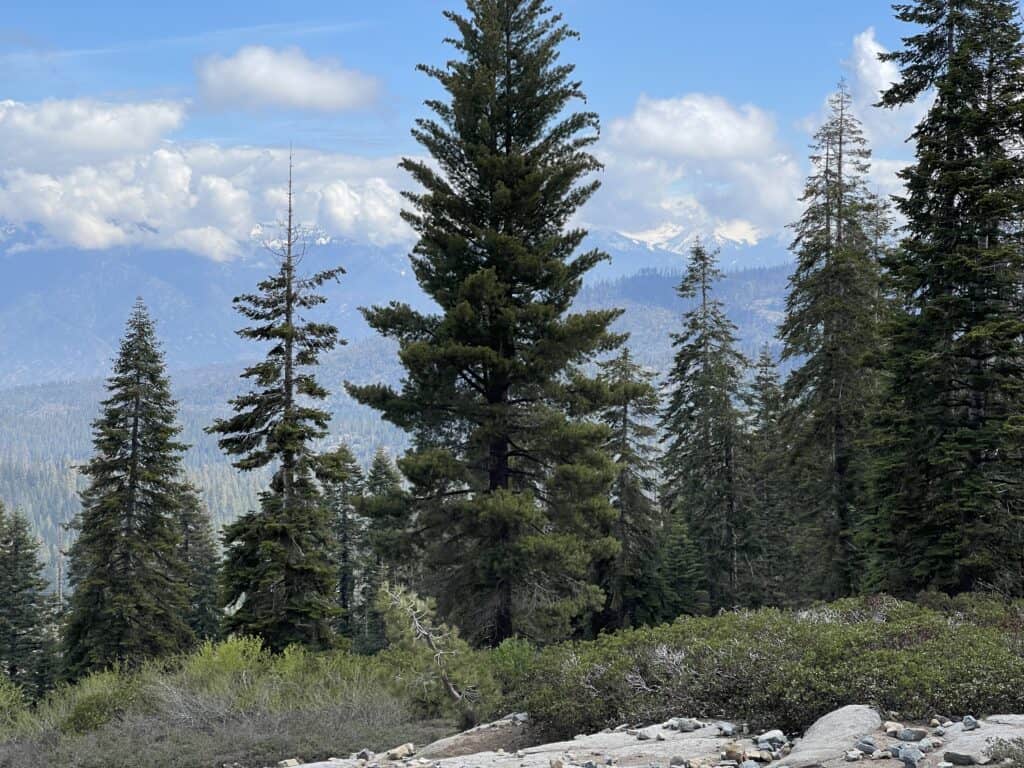
Kings Canyon Overlook is one of the best roadside viewpoints along the northern stretch of the Generals Highway, just south of Grant Grove in Kings Canyon National Park. From the overlook, you can look across a vast landscape of wilderness peaks and deep canyons shaped over time by tectonic uplift, water, and ice.
Why stop here: This is one of the easiest places along the drive to get a broad, high-elevation view without hiking. After spending so much time among giant sequoias and dense forest, the open panorama gives a completely different sense of the Sierra Nevada’s scale.
Allow: About 10–15 minutes. This is primarily a scenic viewpoint and photo stop, so you don’t need to budget much time unless visibility is especially good and you want to linger.
Parking: A designated roadside pullout provides parking at the overlook. Use extra caution when entering and leaving because vehicles can move quickly along this stretch of the Generals Highway and sightlines are limited.
Our take: If we’re continuing north toward Grant Grove, this is a stop we’d usually make. The view feels different from the overlooks encountered earlier in Sequoia and gives you a stronger sense of the rugged backcountry beyond the road. It is especially worthwhile on a clear day when the distant ridges and canyons are sharply visible.
Good to know: Despite the name, Kings Canyon Overlook is not the same thing as driving into the deep canyon along Highway 180 toward Cedar Grove. This overlook is along the Generals Highway near Grant Grove and looks out across the surrounding wilderness. For another elevated view in the Grant Grove area, the National Park Service recommends Panoramic Point.
Grant Grove
If you continue north beyond Sequoia National Park, Grant Grove in Kings Canyon National Park makes an excellent final stop for the scenic drive. The area is home to the General Grant Tree, the world’s second-largest tree by volume, along with the Kings Canyon Visitor Center, short trails, lodging, food, and other visitor services. Grant Grove sits at about 6,600 feet and was once part of General Grant National Park, established in 1890 to protect the giant sequoias from logging.
Why stop here: Grant Grove offers another impressive giant sequoia experience without a long hike. The General Grant Trail is an easy 0.5-mile loop that passes the General Grant Tree, historic Gamlin Cabin, and the Fallen Monarch—a massive hollow sequoia you can walk through. It is also a convenient place to stop for maps, restrooms, information, and a break before continuing farther into Kings Canyon or heading toward Fresno.
Allow: About 45–60 minutes for the General Grant Trail and time at the tree. Allow 1½–2 hours if you also want to visit the Kings Canyon Visitor Center, explore Grant Grove Village, or add another short walk.
Parking: A large parking lot with overflow parking is available at the General Grant Tree trailhead, about one mile from the Kings Canyon Visitor Center. The trailhead also has restrooms and drinking water.
Our take: If you have the time, we think continuing to Grant Grove is absolutely worthwhile. General Sherman is still the signature giant sequoia experience in Sequoia National Park, but General Grant gives you another remarkable tree in a setting that often feels less hectic. For first-time visitors with a full day, this is a rewarding way to finish the drive and say you’ve experienced both Sequoia and Kings Canyon National Parks.
Good to know: Grant Grove is in Kings Canyon National Park, not Sequoia National Park, even though the two parks are managed together and connected by the Generals Highway. The General Grant Tree is also known as the Nation’s Christmas Tree and is the country’s only living national shrine. No shuttle currently operates in the Grant Grove area, so plan to drive and park at the trailhead.
Best Detours From the Sequoia National Park Scenic Drive
The Generals Highway provides plenty to see without leaving the main route, but several of Sequoia National Park’s most memorable experiences require a detour. If you have a full day—or more—we recommend building at least one of these stops into your scenic drive.
Moro Rock
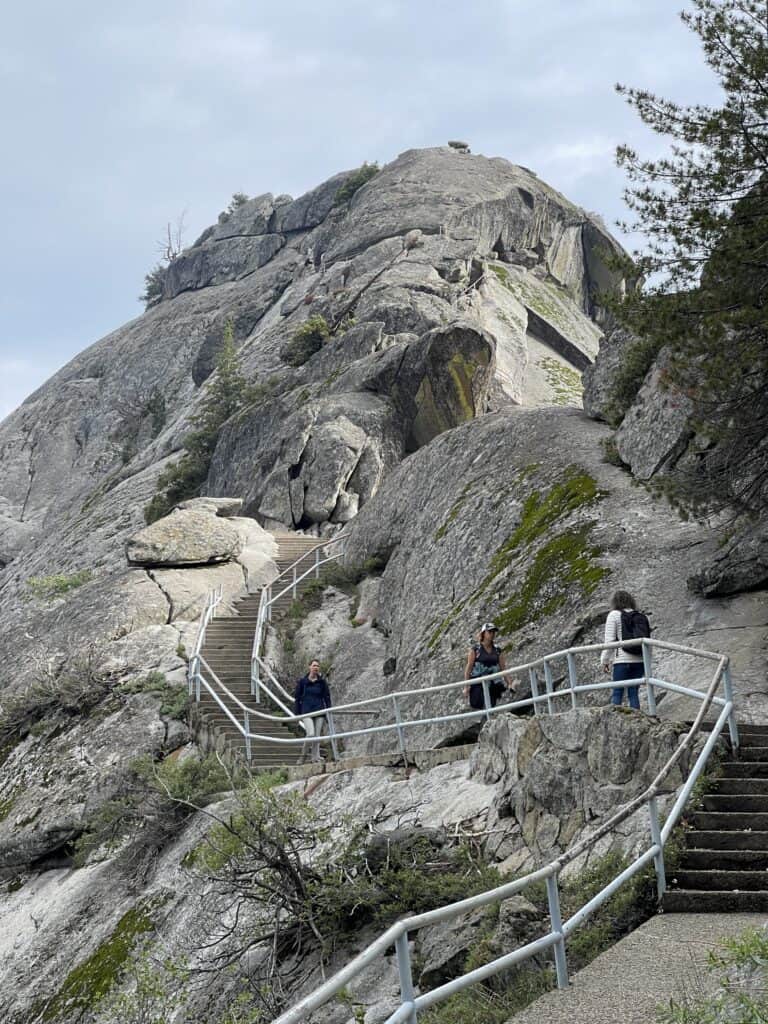
Moro Rock is one of our favorite detours from the Generals Highway and one of the best places in Sequoia National Park for a sweeping Sierra Nevada view. A stone-and-concrete stairway climbs more than 350 steps to the top of the granite dome, where views extend toward the Great Western Divide, the foothills and, on clear days, the San Joaquin Valley.
Why it’s worth the detour: Unlike the roadside overlooks, Moro Rock puts you above the forest canopy. The climb is relatively short, but the scenery from the top makes it feel like a much bigger adventure.
Allow: About 45–60 minutes for the climb, time at the summit, and the return. Give yourself more time if you prefer to take the stairs slowly, especially at this elevation.
Access: Moro Rock is about a mile down Moro Rock/Crescent Meadow Road from the Giant Forest Museum. Parking at the base is limited. During the summer shuttle season, free shuttles run from Giant Forest Museum; on summer weekends and federal holidays, private vehicles are generally restricted from the road while the shuttle is operating.
Our take: If you’re physically comfortable with the stairs and steep drop-offs, Moro Rock is one of the detours we’d prioritize on a first visit. The view is dramatically different from what you’ll experience beneath the sequoias.
Good to know: The stairway has steep sections and exposed drop-offs, and the elevation makes the climb feel harder than its distance suggests. Avoid the summit when thunderstorms are approaching, and don’t attempt the stairs when snow or ice makes them unsafe.
Tunnel Log
Continue beyond Moro Rock, and you’ll reach one of Sequoia National Park’s classic roadside photo opportunities: Tunnel Log. After a giant sequoia fell across the road in the 1930s, workers cut a tunnel through the trunk, allowing vehicles to drive directly through the fallen tree.
Why it’s worth the detour: It’s fun, quick, and unmistakably Sequoia. Driving through a giant sequoia makes for a memorable photograph and is especially popular with first-time visitors and families.
Allow: About 5–10 minutes if traffic is light.
Access: Tunnel Log is approximately half a mile beyond Moro Rock on the Moro Rock/Crescent Meadow Road. Parking is very limited to roadside turnouts, so don’t stop in the travel lane if the area is crowded. Vehicles taller than 8 feet can use the bypass rather than driving through the tunnel.
Our take: This is one of those attractions that’s touristy—and still worth doing. It requires almost no additional time if you’re already heading toward Crescent Meadow, so we’d include it on a first visit.
Good to know: Tunnel Log is different from Tunnel Rock near the Ash Mountain Entrance. Tunnel Log is a fallen giant sequoia you can drive through; Tunnel Rock is a granite roadside landmark near the southern entrance.
Crescent Meadow
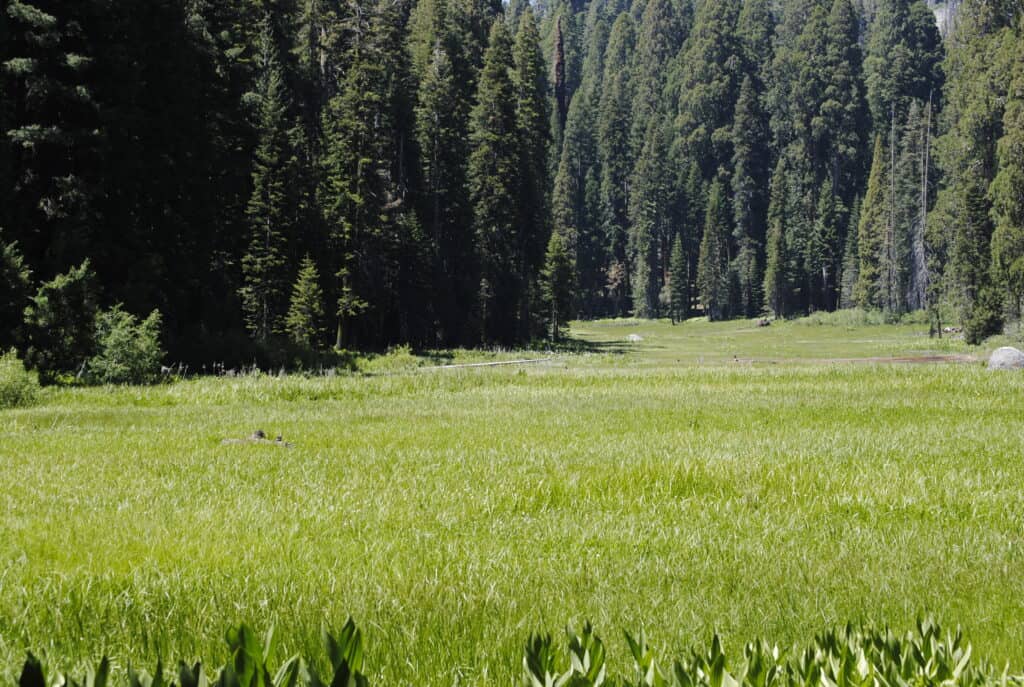
At the end of the road, Crescent Meadow offers a completely different experience from the scenic overlooks. Surrounded by giant sequoias, the meadow is the starting point for several walks through Giant Forest and has long been considered one of Sequoia’s most beautiful areas.
A popular option is the roughly 1.8-mile round-trip walk toward Log Meadow and Tharp’s Log, a historic cabin incorporated into a hollowed-out fallen sequoia.
Why it’s worth the detour: Crescent Meadow lets you leave the car behind and experience Giant Forest at a slower pace. Meadows also provide a different ecosystem from the surrounding sequoia forest and can be good places to watch for wildlife.
Allow: About 1–2 hours if you plan to walk around Crescent Meadow and visit Tharp’s Log. Allow less if you’re simply stopping to see the meadow.
Access: Crescent Meadow is at the end of the Moro Rock/Crescent Meadow Road. Parking is limited, and during summer weekends and federal holidays the road is generally closed to private vehicles while the free shuttle operates.
Our take: If you have enough time to do more than drive from viewpoint to viewpoint, Crescent Meadow is one place we’d recommend slowing down. It gives you a quieter, more immersive experience than many of Sequoia’s heavily visited roadside attractions.
Good to know: Bears are often seen around Sequoia’s meadows, especially in spring and early summer. Keep your distance, never approach wildlife, and don’t leave food unattended. The Moro Rock/Crescent Meadow Road also closes when snow makes it impassable, so this is primarily a late-spring-through-fall detour.
Crystal Cave
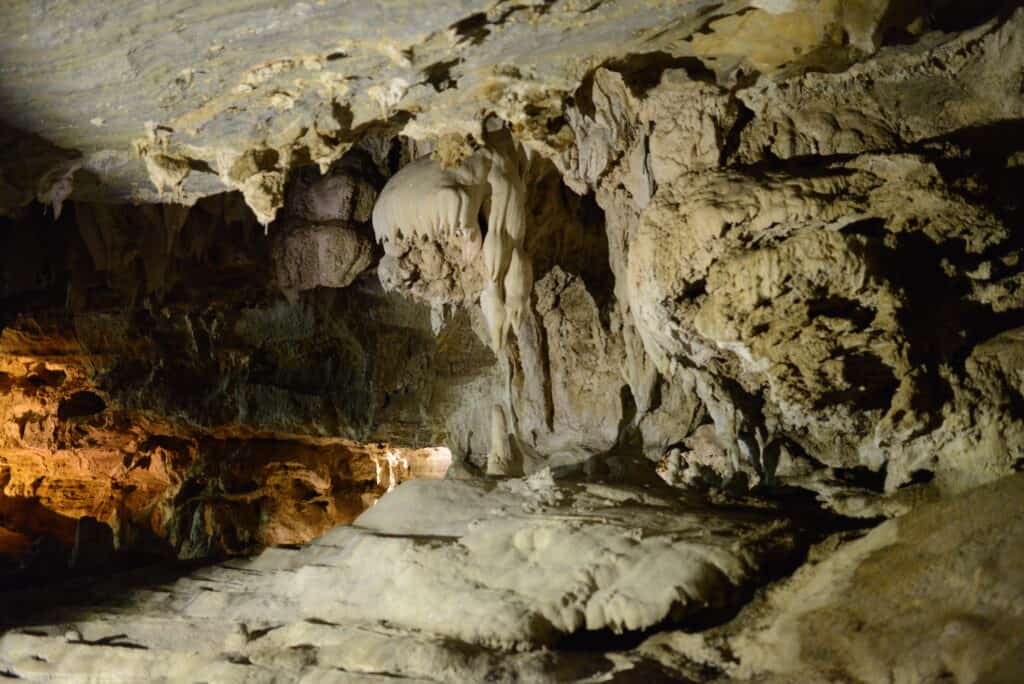
We recommend Crystal Cave only if you have substantial extra time and can secure a tour reservation. The marble cavern lies off a narrow side road south of Giant Forest and can only be visited on a guided tour.
The cave itself includes a half-mile loop, but reaching the entrance also requires a steep half-mile walk from the parking area. NPS recommends planning roughly half a day for the drive, hike, and approximately 50-minute cave tour.
Why it’s worth the detour: Crystal Cave reveals an entirely different side of Sequoia National Park. After a day dominated by enormous trees, granite peaks, and mountain views, exploring an underground marble cavern adds surprising variety to a visit.
Allow: About half a day, including driving to the cave, walking to and from the entrance, and taking the guided tour.
Access: Crystal Cave Road branches from the Generals Highway near Giant Forest and continues about 6.5 miles to the cave parking area. The road is narrow and winding, and vehicles longer than 22 feet are prohibited.
Our take: We would not try to squeeze Crystal Cave into an already packed one-day scenic-drive itinerary. If you have a second day—or if caves are a particular interest—it’s worth it. Otherwise, we’d prioritize Moro Rock, Giant Forest, and Crescent Meadow.
Good to know: Crystal Cave is seasonal and requires a guided-tour ticket; tickets are not sold at the cave. The 2026 tour season has ended, and tours are expected to resume in late spring 2027. Because opening dates and road conditions can change, check the National Park Service and Sequoia Parks Conservancy before building Crystal Cave into your itinerary.
How Long Does the Sequoia National Park Scenic Drive Take?
If you simply drive the Generals Highway from Sequoia National Park’s Ash Mountain Entrance to Grant Grove in Kings Canyon National Park without sightseeing stops, plan on about two hours one way. The National Park Service recommends roughly one hour from the Sequoia entrance to Lodgepole, followed by another 45 minutes to one hour from Lodgepole to Grant Grove.
But we would not recommend treating this as a two-hour drive. The viewpoints, giant sequoias, short walks, and roadside stops are what make this route worthwhile.
If You Have 2–3 Hours
Focus on the drive from the Ash Mountain Entrance through Giant Forest rather than trying to reach every stop.
We would prioritize:
- Hospital Rock
- Amphitheater Point
- Four Guardsmen
- Giant Forest Museum and Beetle Rock
- General Sherman Tree
This gives you the dramatic climb from the foothills into Giant Forest along with some of Sequoia’s signature scenery and giant sequoias.
If You Have Half a Day
Allow about 4–5 hours for a more relaxed scenic drive. In addition to the major Giant Forest stops, you can add several roadside overlooks and continue toward Lodgepole.
A half-day itinerary might include:
- Tunnel Rock
- Hospital Rock
- Amphitheater Point
- Eleven Range Overlook
- Four Guardsmen
- Giant Forest Museum and Beetle Rock
- General Sherman Tree
- Lodgepole
You may also have time for one short detour, such as Moro Rock, depending on parking, shuttle schedules, and crowds.
If You Have a Full Day
For a first visit, we recommend a full day. With 6–8 hours or more, you can enjoy Generals Highway without feeling like every stop cuts into your schedule.
A full-day scenic drive gives you time for the major roadside viewpoints, General Sherman Tree, Giant Forest, Lodgepole, and one or two detours such as Moro Rock, Tunnel Log, or Crescent Meadow. If you start early, you can also continue north past Redwood Mountain Overlook and Kings Canyon Overlook to Grant Grove.
After more than 20 camping trips to Sequoia, this is the pace we prefer. The Generals Highway is one of those drives where slowing down makes the experience better—not just because of the scenery, but because parking, wildlife sightings, short walks, and unexpected viewpoints can easily add time to your day.
Don’t Underestimate the Driving Time
Distances in Sequoia National Park can be deceptive. The Generals Highway is steep, narrow, and winding in places, particularly between the foothills and Giant Forest. This is not a road where you should expect to maintain normal highway speeds.
Summer crowds can also add time. On busy Fridays, Saturdays and holidays, the National Park Service warns that entrance lines and parking congestion can be significant.
Our advice is simple: start early and avoid over-scheduling your day. If this is your first Sequoia visit, we’d rather see you enjoy six or seven worthwhile stops than rush through a dozen just to check them off a list.
Our recommendation: Allow at least half a day for the Sequoia National Park scenic drive. For a first visit, give yourself a full day so you have time for Giant Forest, General Sherman Tree, scenic overlooks and at least one worthwhile detour.
Which Sequoia Detours Should You Choose?
If you’re short on time, we’d prioritize Moro Rock and Tunnel Log, since they can easily be combined on the same side road. With another hour or two, continue to Crescent Meadow and take a walk through Giant Forest.
We’d save Crystal Cave for travelers with a second day in the park or anyone particularly interested in caves. It’s a rewarding experience, but the time commitment makes it difficult to combine with a complete Generals Highway scenic drive in a single day.

Is the Generals Highway Difficult to Drive?
In our experience, Generals Highway has been an easy, enjoyable drive, even after more than 20 camping trips to Sequoia National Park. We wouldn’t describe it as a scary road for most drivers comfortable with normal mountain driving.
That said, this is still a Sierra Nevada mountain road. The stretch between the Ash Mountain Entrance and Giant Forest includes numerous curves, switchbacks, and significant elevation gain as the highway climbs from the foothills to the park’s higher elevations.
For us, the key is simply to take your time.
The road is paved throughout, with frequent turnouts where slower drivers can safely let traffic pass. We have never found the drive difficult, but visitors uncomfortable with winding mountain roads or steep drop-offs may want to allow extra time and avoid feeling rushed.
What to Expect on the Generals Highway
Drivers should be prepared for:
- Winding curves and switchbacks
- Steady elevation gain between the foothills and Giant Forest
- Slower traffic during busy periods
- Occasional narrow sections
- Wildlife near or crossing the roadway
- Possible snow, ice, or chain restrictions during colder months
When descending the highway, the National Park Service recommends using a lower gear rather than riding your brakes continuously. This helps prevent brakes from overheating on the long downhill sections.
Our take after 20+ trips: We find the Generals Highway very manageable and have always found it an easy drive when conditions are good. The scenery is dramatic, but the road itself has never felt intimidating to us. If you’re comfortable driving winding mountain roads and don’t rush, you should be fine.
Good to know: Larger RVs and vehicles have additional restrictions on portions of the Generals Highway, particularly between Potwisha Campground and Giant Forest. If you’re traveling in a long RV or towing a trailer, check current National Park Service vehicle-length recommendations before choosing your route.
Bottom line: For most drivers, the Generals Highway is not difficult to drive. It is a paved mountain road with plenty of curves, but in our experience it has been straightforward, scenic and enjoyable.
Can You Drive the Generals Highway in an RV?
Yes, you can drive portions of the Generals Highway in an RV, but the National Park Service has important vehicle-length advisories on the southern approach into Sequoia National Park.
Vehicles longer than 24 feet are not advised between the Foothills Visitor Center and Potwisha Campground, and vehicles longer than 22 feet are not advised between Potwisha Campground and Giant Forest Museum. This section of the highway is steep, narrow, and winding, with numerous tight turns.
If you are traveling in a longer RV, the National Park Service recommends entering the parks from the north via Highway 180 and the Big Stump Entrance near Grant Grove. Highway 180 is wider, straighter, and less steep than the Generals Highway approach from Three Rivers. This is the way we enter the park when towing our Airstream trailer.
What RV Travelers Should Know
- Over 24 feet: Avoid the section between Foothills Visitor Center and Potwisha Campground.
- Over 22 feet: Avoid the section between Potwisha Campground and Giant Forest Museum.
- Over 40 feet: Single vehicles are prohibited between Potwisha and Giant Forest Museum.
- Towing a trailer: Pay particular attention to the combined vehicle length and avoid narrow side roads with additional restrictions.
- Moro Rock/Crescent Meadow Road: Vehicles longer than 22 feet and vehicles towing trailers are prohibited.
Our take: We consider the Generals Highway an easy drive in a normal passenger vehicle, but we would approach it very differently with a large RV or trailer. The tight switchbacks south of Giant Forest leave much less room for long vehicles. If we were traveling in a larger RV, we’d use Highway 180 and the Big Stump Entrance rather than climbing from Three Rivers.
Good to know: These are not merely suggestions for convenience. Oversized vehicles can cross the center line on the tightest curves and create hazards for themselves and other drivers. Always check current National Park Service road conditions and vehicle restrictions before entering the park, especially if you’re towing or traveling in a motorhome.
Bottom line: Yes, RVs can visit Sequoia and Kings Canyon National Parks, but if your rig is longer than about 22–24 feet, the northern approach via Highway 180 is generally the safer and easier choice.
Flying to Sequoia National Park?
For most visitors flying to Sequoia National Park, Fresno Yosemite International Airport (FAT) is the most practical option. The airport is about 1 hour 15 minutes from the Highway 180 entrance to Kings Canyon National Park and about 1 hour 45 minutes from Sequoia’s Ash Mountain Entrance on Highway 198.
Because this itinerary centers on driving the Generals Highway and stopping at viewpoints along the way, renting a car is the easiest way to explore the park on your own schedule . If you’re flying into California, you can compare flights to Fresno and compare rental car rates for your Sequoia road trip before your visit.
Good to know: A seasonal shuttle connects Visalia with Sequoia National Park during the summer, but it does not serve Kings Canyon National Park. For the scenic drive described in this guide—especially if you plan to continue north to Grant Grove—we recommend having your own vehicle.
Should I Visit Sequoia or King’s Canyon?
Our answer is to visit both! Sequoia and Kings Canyon National Parks are two of California’s most spectacular places. The Generals Highway takes you directly from Sequoia National Park into Kings Canyon.
The stops recommended will take you to some of the best viewpoints in Sequoia National Park. At the end of the drive, you’ll reach a majestic overlook with a view of the splendor of Kings Canyon.
Is Kings Canyon Scenic Byway worth it?
Absolutely! Kings Canyon Scenic Byway is a great road trip that offers incredible views and unforgettable experiences. Along the way, you’ll explore some of California’s most beautiful landscapes and experience the wonders of Sequoia and Kings Canyon National Parks.
Whether you’re looking for an adrenaline rush, peaceful walks through ancient forests, or breathtaking scenery, this trip is worth every minute. Plus, you may even get a glimpse of the wildlife that lives in these mountains.
Where To Stay Near Sequoia National Park
When visiting Sequoia National Park, you have a few lodging options.
Inside Sequoia National Park
If you want to stay inside the park, we recommend Wuksachi Lodge. The Wuksachi Lodge is located in the heart of Sequoia National Park, near the Lodgepole campground. It’s a picturesque lodge surrounded by incredible views in all directions. The lodge features spacious guest rooms with modern amenities and comfortable furnishings.
The on-site restaurant is a great spot to grab dinner or drinks after hiking in the park. Booking your stay here makes for an unforgettable experience in the heart of Sequoia National Park!
Check rates and availability at Wuksachi Lodge
Outside Sequoia National Park
The Buckeye Tree Lodge in Three Rivers is a fantastic option if you’re looking for a more relaxed atmosphere. This rustic mountain lodge is tucked away in a beautiful wooded setting that offers stunning views of the Sierra Nevada mountains.
The property offers cabins and a lodge. The cabins can accommodate larger groups, and the hotel-style lodge rooms have views of the river. The property is pet friendly (we recommend you review the website for specific instructions about bringing pets).
Activities at the property range from onsite massages to nearby fishing opportunities. With convenient access to Sequoia National Park, Buckeye Tree Lodge is an excellent spot for those wanting to explore all this region offers!
Check rates and availability at Buckeye Tree Lodge
Frequently Asked Questions – FAQ
Yes. The Generals Highway is the main road through Sequoia National Park, connecting the Ash Mountain Entrance near Three Rivers with Giant Forest, Lodgepole, and eventually Grant Grove in Kings Canyon National Park. The road is paved but winding, and seasonal snow or weather can cause temporary closures. Larger RVs and trailers should also check current vehicle-length restrictions before using the southern portion of the highway.
For most drivers, no. In our experience after more than 20 trips to Sequoia National Park, the Generals Highway has been an easy and enjoyable drive in good conditions. It is a mountain road with curves, switchbacks, elevation changes, and some drop-offs, so drivers who are uncomfortable with winding roads may find parts of it intimidating. Take your time, use turnouts if traffic builds behind you, and check current road conditions before your visit.
Yes, but larger RVs should avoid the steep, winding section of the Generals Highway between the Ash Mountain Entrance and Giant Forest. The National Park Service advises against vehicles longer than about 22–24 feet on parts of this southern route. If you are traveling in a larger motorhome or towing a trailer, entering from the north via Highway 180 and the Big Stump Entrance is generally easier. Always check current vehicle-length restrictions and road conditions before your trip.
Final Thoughts – Sequoia National Park Scenic Drive
The Sequoia National Park scenic drive is an incredible way to experience the beauty and grandeur of this region. This route has something for everyone, from breathtaking views of the Sierra Nevada mountains to majestic overlooks of Kings Canyon. And with convenient access to lodging within and near the park, it’s easy to make a weekend out of your visit.
No matter your plans, this scenic drive will create memories that will last a lifetime. So hop in the car and prepare for a lifetime experience at Sequoia National Park! Happy trails!
Related Reading
Best Campground in Sequoia National Park Guide
Our USA National Parks articles and resources
Our California articles and resources
